Download PDF The Origin of Consciousness in the Breakdown of the Bicameral Mind, by Julian Jaynes
Simply for you today! Discover your favourite e-book right below by downloading and getting the soft documents of guide The Origin Of Consciousness In The Breakdown Of The Bicameral Mind, By Julian Jaynes This is not your time to typically visit guide shops to get an e-book. Here, varieties of book The Origin Of Consciousness In The Breakdown Of The Bicameral Mind, By Julian Jaynes and collections are readily available to download and install. One of them is this The Origin Of Consciousness In The Breakdown Of The Bicameral Mind, By Julian Jaynes as your preferred publication. Obtaining this publication The Origin Of Consciousness In The Breakdown Of The Bicameral Mind, By Julian Jaynes by online in this site can be recognized now by going to the web link web page to download and install. It will be simple. Why should be right here?
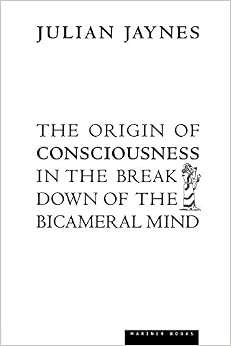
The Origin of Consciousness in the Breakdown of the Bicameral Mind, by Julian Jaynes

Download PDF The Origin of Consciousness in the Breakdown of the Bicameral Mind, by Julian Jaynes
The Origin Of Consciousness In The Breakdown Of The Bicameral Mind, By Julian Jaynes. A work might obligate you to always enhance the knowledge and encounter. When you have no adequate time to improve it directly, you could get the encounter and also expertise from reading the book. As everybody knows, book The Origin Of Consciousness In The Breakdown Of The Bicameral Mind, By Julian Jaynes is popular as the window to open the world. It indicates that reading publication The Origin Of Consciousness In The Breakdown Of The Bicameral Mind, By Julian Jaynes will certainly give you a new method to discover every little thing that you require. As the book that we will certainly provide here, The Origin Of Consciousness In The Breakdown Of The Bicameral Mind, By Julian Jaynes
When you currently really feel bemused to try the particular books to check out, The Origin Of Consciousness In The Breakdown Of The Bicameral Mind, By Julian Jaynes can be an option. This is a wise choice for you. Well, the book could lead you to earn better selections and also alternatives. After getting the book, you will not be bemused again to locate the best book. Publication is one of the windows that open up the globe. This publication is additionally exactly what you require in order to accompany you.
When you have this routine to do in daily, you can be abundant. Rich of experience, rich of knowledge, lesson, and rich of competent life can be obtained effectively. So, never be uncertainty or perplexed with exactly what this The Origin Of Consciousness In The Breakdown Of The Bicameral Mind, By Julian Jaynes will certainly offer to you. This newest book is once more an extremely outstanding book to read by people like you. The material is so ideal and also matches to exactly what you need now.
By by doing this, you can be better to have spirit to check out. The simple means to obtain, bring, and enjoy analysis of this book is also creating when getting it in soft data. By saving in some devices, you are most likely having more than a book. So, make certain that you download and install and enjoy the The Origin Of Consciousness In The Breakdown Of The Bicameral Mind, By Julian Jaynes to read. The web link that we supply will assist you in eating the appropriate book there.
From The New Yorker
"When Julian Jaynes . . . speculates that until late in the twentieth millennium b.c. men had no consciousness but were automatically obeying the voices of the gods, we are astounded but compelled to follow this remarkable thesis."
Read more
Review
"When Julian Jaynes . . . speculates that until late in the twentieth millennium b.c. men had no consciousness but were automatically obeying the voices of the gods, we are astounded but compelled to follow this remarkable thesis." -- John Updike The New Yorker
Read more
See all Editorial Reviews
Product details
Paperback: 512 pages
Publisher: Mariner Books; 31578th edition (August 15, 2000)
Language: English
ISBN-10: 0618057072
ISBN-13: 978-0618057078
Product Dimensions:
5.9 x 1.3 x 8.9 inches
Shipping Weight: 1.3 pounds (View shipping rates and policies)
Average Customer Review:
4.5 out of 5 stars
296 customer reviews
Amazon Best Sellers Rank:
#54,166 in Books (See Top 100 in Books)
I first bought this book shortly after it was first published -- and couldn't understand a bit of it, so it went into my pile to resell to get money for more books. But it stuck in my mind for a number of years, a feeling that something being said here was really important, so I bought it again at some point after the second printing (1990 or so). It's taken me until now to finally read it (April 2015), and I could not put it down. I agree with the reviewer quoted on the back cover that this probably is indeed one of (if not the) the most important books of the second half of the 20th century.A number of the more recent reviews here include comments I would make. The latest review I think mistakenly states that the theory is that the two halves of our brain did not communicate like they do now -- I think the point is that unlike now, when the right hemisphere has become subordinated to the left "conscious" hemisphere, in ancient times both hemispheres worked actively, were engaged actively, and were each given equal attention. I will also say that I took both a bachelor's and master's degree in communicative disorders in the early to mid 1990s and continued until just recently keeping up to date on neuroanatomy as a practicing medical speech-language pathologist, and everything posited by Jaynes agrees completely with the more current "brain science." As it turns out, I have been a lifelong (45 years of study at this point) student of history, literature, archeology and religion, and again everything posited by Jaynes rings true.Having just finished reading the book, I doubt that I've yet worked out all of the implications that Jaynes' theory holds for these various disciplines, but my sense is that it is immense. This is certainly a book that should be on a "must read" list. While the writing is dense and there is a huge amount of information to be absorbed here, he was also a much more literate and literary writer than most these days. You need to pay attention to his every word and often go back over statements, so it's not at all an easy read, but it certainly is a worthwhile one.
I first heard of this book while in graduate school the year it was written. As superficially described by various reviewers at the time it seemed like a crazy idea, but Kindle deals being what they are I ended up buying it about a year ago and have finally gotten around to reading it all.Dr. Jaynes is up-front about his theory right from the beginning. Consciousness as we understand it today is a relatively new (past few thousand years) and learned phenomenon. That which contributes the most to its learning, that is how and in what ways we think of our selves as conscious beings, is the evolution of spoken and written language along with evolving social context. He begins his book by demonstrating how tenuous and vague a thing consciousness is by suggesting examples and simple experiments illustrating how much of our lives goes on apart from some experience that we take to be the core of consciousness, the relation of our sense of self, our "I" to the rest of the world.In Jaynes' view the first humans had a consciousness much like the higher animals. There was a perceptual arena to be sure, but not any sort of recursive evaluation of it. As humans began to communicate with more sophisticated languages, languages with some grammer and structure, consciousness evolved with those changes not into today's version of it, but rather into a situation where decisions faced in novel situations were made based on the linguistic expressions of hallucinated voices. Such voices told people how to act, not in common everyday circumstances but when faced with novel situations. As human beings came together into larger groups teaching themselves to farm and domesticate animals (presumably with the help of their voices), this mechanism evolved along quite sophisticated lines into "the gods" of old speaking to everyone, but with higher gods represented in the voices of leaders, kings, priests, etc. All the idols of antiquity were not merely superstitious projections, the people, all people, actually heard them talking!As language evolved this mechanism became sophisticated enough to support major civilizations like Sumer, Babalyon, and early Egypt, likely also similar developments in India and China. Eventually however, advancing language and more sophisticated social requirements became too much for the mechanism and it began to break down. Even so it did not disappear over-night and evolved into various oracular sorts of phenomena that we find in Greece, Egypt, and elsewhere as history progresses though the last millenium BC. Jaynes traces all of this later evolution through the nature of literature as it appears from the earliest books of the Illiad, the Old Testament, and many other sorts of documents. He points out that the notion of a self-reliant or recursive self is simply not mentioned in the earliest literature and speculates that this is not because people had no words for it, but rather that they had no words for it because they didn't experience it!If all of this seems rather odd, it seems less odd as Jaynes applies his ideas to modern phenomena like hypnotism, schizophrenea, and the imaginary companions of some children. Jaynes here is not suggesting that schizophrenics (to take one example) are simple reversions to a human consciousness of 4000 or more years ago, because in those contexts, what was heard and how it was treated were not pathological conditions but the normal stuff of everyday life! But he does claim that the same physiological mechanisms are at work and that his theory puts such modern phenomena in a more meaningful context than other theories. As crazy as it sounds, I found myself agreeing with him as I got further along in the history and especially into the psychology. Starting out an extreme skeptic I came away at least convinced of the theory's reasonableness. If it should turn out to be true, we are not yet at the end of the story. Consciousness as we presently find it is in great part a product of language as we presently have it along with social context. Looking back from another thousand or two thousand years in the future, it is quite possible we will not recognize ourselves.
The Origin of Consciousness in the Breakdown of the Bicameral Mind, by Julian Jaynes PDF
The Origin of Consciousness in the Breakdown of the Bicameral Mind, by Julian Jaynes EPub
The Origin of Consciousness in the Breakdown of the Bicameral Mind, by Julian Jaynes Doc
The Origin of Consciousness in the Breakdown of the Bicameral Mind, by Julian Jaynes iBooks
The Origin of Consciousness in the Breakdown of the Bicameral Mind, by Julian Jaynes rtf
The Origin of Consciousness in the Breakdown of the Bicameral Mind, by Julian Jaynes Mobipocket
The Origin of Consciousness in the Breakdown of the Bicameral Mind, by Julian Jaynes Kindle

Tidak ada komentar:
Posting Komentar